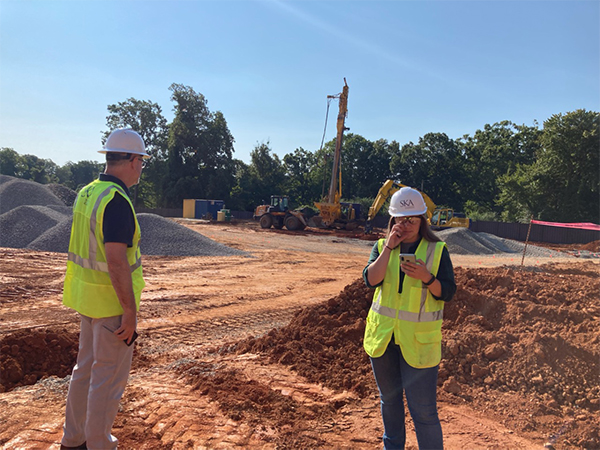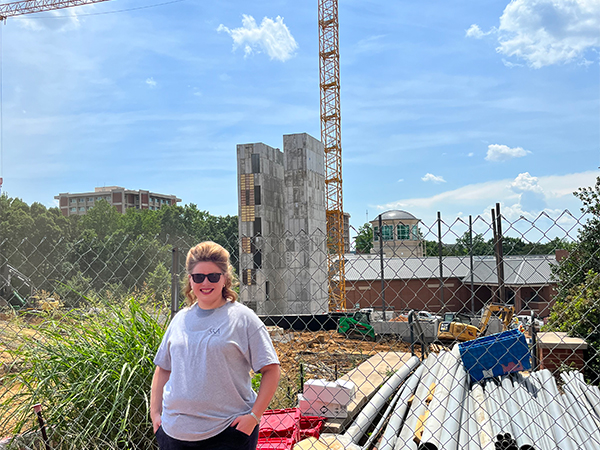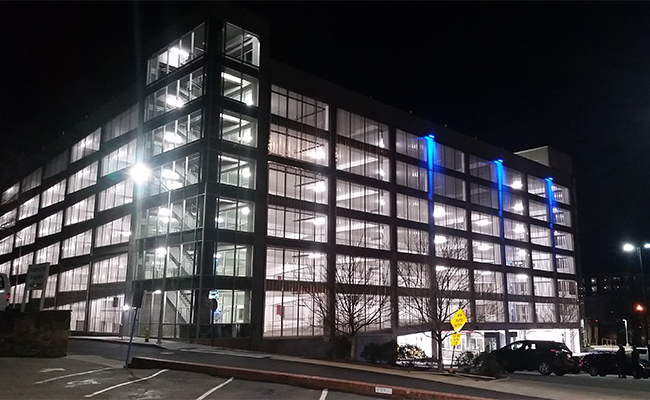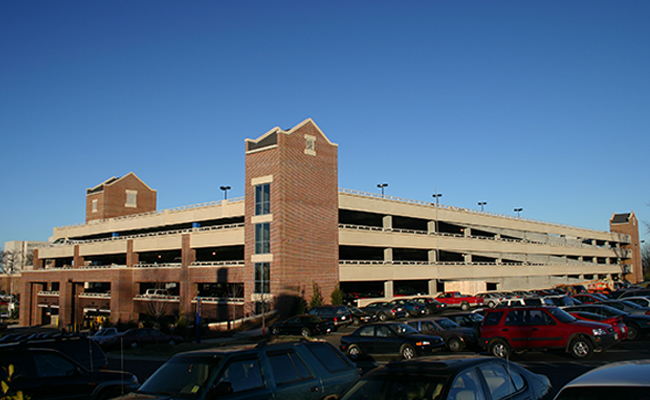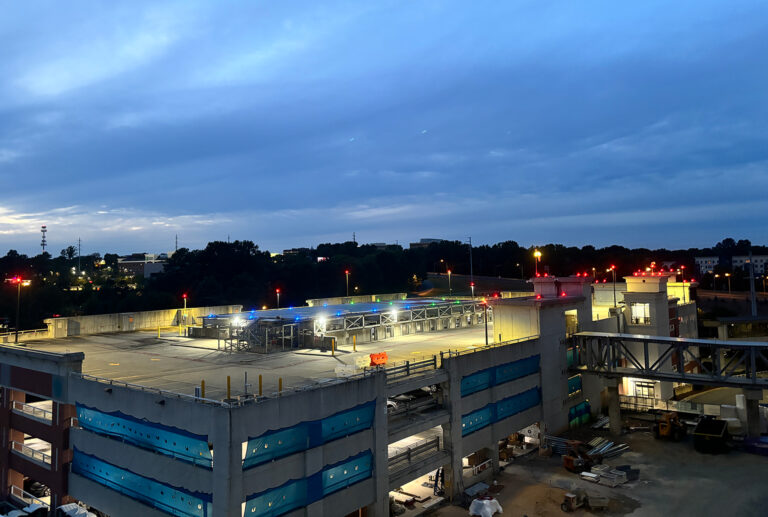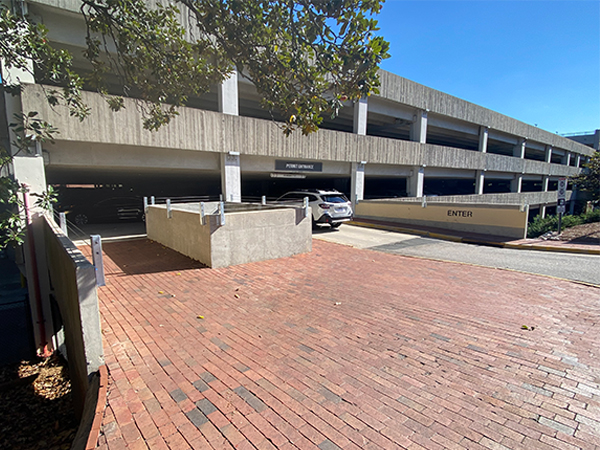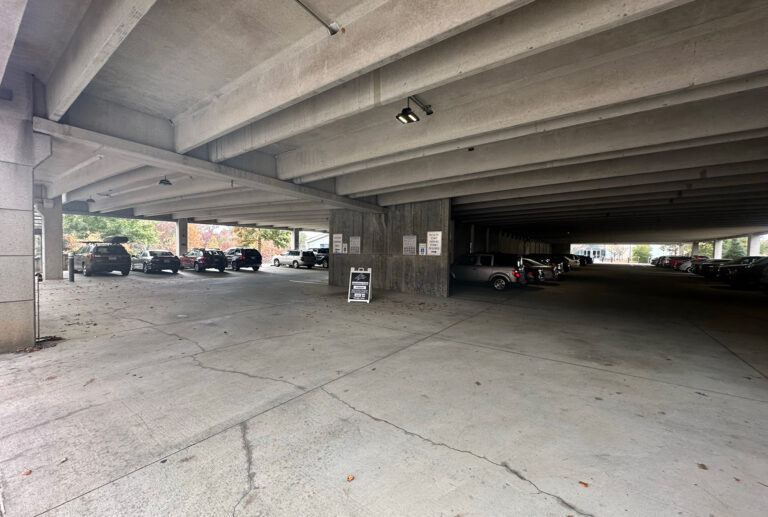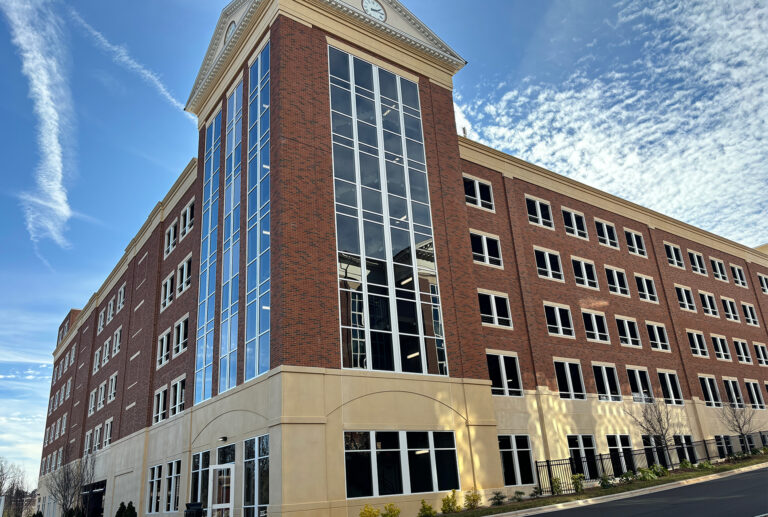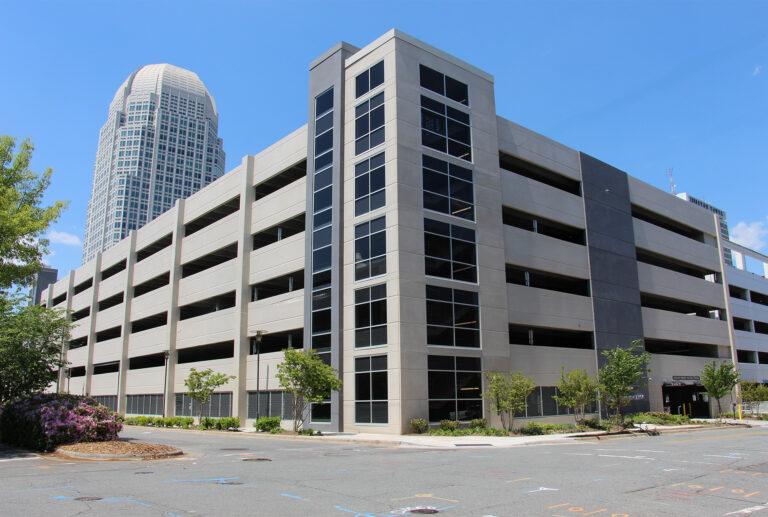

Whether designing new, standalone parking decks, decks attached to office or government buildings, or complex, below-grade decks, SKA engineers have the expertise and experience for a range of structured parking projects. Our portfolio includes over 1,000 parking deck projects, including cast-in-place and precast decks, ranging from 100 spaces to over 2,000 spaces.
Owners bring us in as parking structure consultants at every stage — siting and designing a new deck, diagnosing why an existing one is coming apart, and planning repairs that buy another two or three decades of service life.
Parking Structure Design and New Construction
We design standalone decks, decks integrated into office and government buildings, and below-grade structures where waterproofing and drainage carry as much risk as the framing does. Both cast-in-place and precast systems are well represented in our portfolio. The choice between them usually comes down to site constraints, construction schedule, and long-term maintenance budget rather than first cost alone — and it is worth settling early, because it drives nearly every detail that follows.
- Structural design for new decks from roughly 100 to over 2,000 spaces
- Framing studies comparing cast-in-place and precast double-tee systems
- Below-grade and podium decks, including waterproofing and drainage design
- Expansion and vertical addition of existing structures
- Third-party peer review of another engineer’s parking structure design
Parking Deck Repair and Restoration
At SKA, we also have extensive experience repairing parking decks and extending their useful service life. Most of the decks we are asked to look at are not failing — they are twenty-five or thirty years into a service life nobody planned to manage, with chloride-contaminated concrete, corroding reinforcement, failed joint sealants, and a traffic coating that stopped doing its job a decade ago.
We have broad knowledge and demonstrated expertise in historical and contemporary codes and practices, deterioration mechanisms of structures, and state-of-the-art repair and service-life extension approaches. That combination matters more on repair work than on new design, because the structure in front of you was built to a code that is often no longer in print.
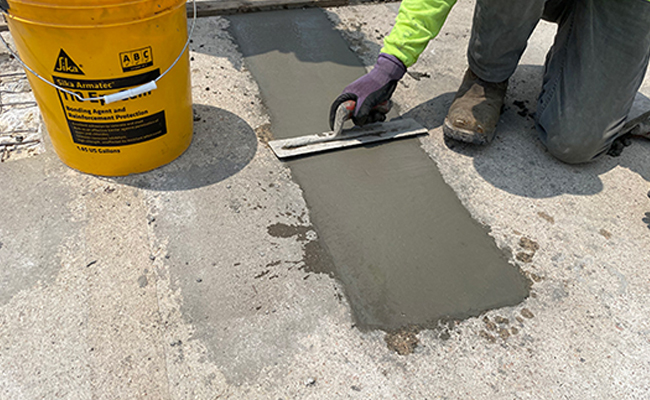
- Concrete repair, including partial-depth and full-depth patching
- Repair of conventionally reinforced and post-tensioned decks
- Traffic-bearing membrane and coating replacement
- Expansion joint and sealant replacement
- Phased repair documents that keep the deck open and earning during construction
Condition Assessment and Testing
SKA provides an array of testing services for facades and concrete and steel components to define material properties, leak conditions, and corrosion characteristics in developing solutions. Testing is an in-house division rather than a subcontract, which means the engineer interpreting the data is the same one who seals the repair drawings.
- Chloride sampling and corrosion-potential surveys
- Petrographic and materials evaluation
- Leak investigation and water testing
- Structural capacity evaluation of existing framing
- Condition assessments supporting capital planning and property due diligence
Cathodic Protection
Where chloride contamination is widespread, conventional patching removes the visible damage but leaves the underlying corrosion active — and can accelerate it in the concrete immediately around each new patch. Cathodic protection treats the cause instead of the symptom, and SKA has designed and monitored these systems on parking structures where repeated patching had stopped being economical. It is not the right answer for every deck. When it is the right answer, it can extend service life well past anything a patching program achieves on its own.
Where We Work
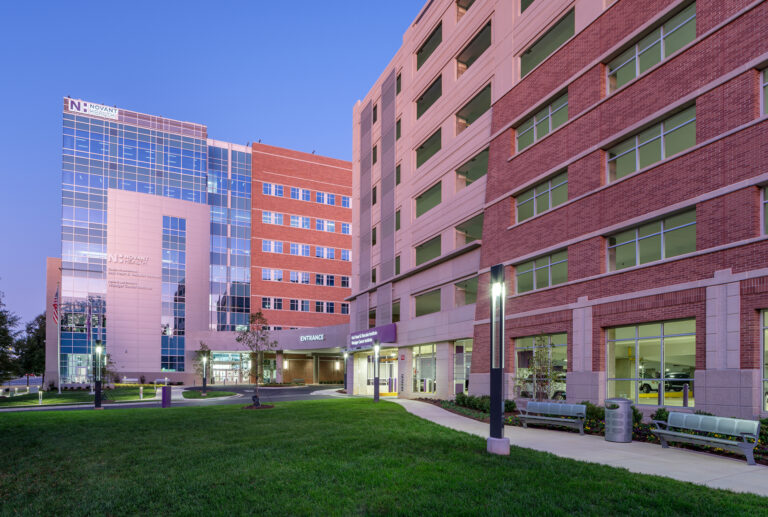
SKA engineers parking structures throughout North Carolina, South Carolina, and Virginia, working from offices in Greensboro, Charlotte, Asheville, Raleigh–Durham, and Wilmington, North Carolina; Charleston, South Carolina; and Charlottesville, Virginia. Our parking work includes decks for universities, hospitals, county and municipal government, and private developers – among them High Point University, Forsyth County Courthouse, Novant Health, NC State University, and UNC Asheville.