
Forensic Investigation

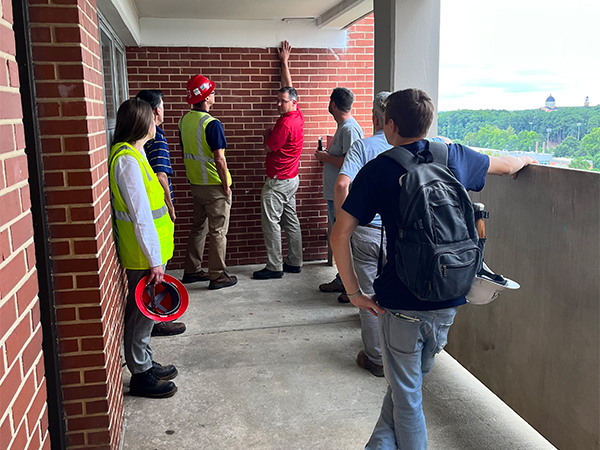
Our forensic investigations (including building envelope, structural, etc.) often consist of cross over between disciplines resulting in solutions with a great amount of collaboration between our internal teams. In the event of structural or building envelope failures, SKA moves quickly to assess the need for temporary repairs and stabilization. Then and only then, do we seek to determine what went wrong, evaluate the options and costs, recommend a course of action, develop a remedial design and monitor repairs. With older buildings and structures, such as parking decks, SKA conducts thorough condition surveys to identify problem areas and to develop maintenance and restoration alternatives.


  • Infrared surveys
  • Water & air infiltration testing
  • Moisture vapor transmission testing
  • Materials & corrosion testing
  • Coating testing
  • Concrete testing
American Concrete
ABAA
AAMP
International Concrete Institute
IBEC Building Enclosure
Building Enclosures
Frequently Asked Questions
What is forensic engineering investigation?

Forensic engineering investigation determines the cause of a building failure or performance problem through evidence gathering, testing, and analysis. SKA Consulting Engineers investigates failures spanning structural, building enclosure, and mechanical systems, documenting conditions, identifying root cause, and, where needed, designing stabilization and remedial repairs.

When should a building owner hire a forensic engineer?

Typically after visible structural distress, water intrusion that resists repair, a partial or complete collapse, storm or fire damage, or a dispute over construction quality. Early involvement matters: evidence degrades quickly and repairs can destroy the very conditions an investigation depends on. SKA is often engaged before repairs begin so findings hold up under scrutiny.

What does a forensic investigation include?

Investigations generally combine document review, site observation, destructive and non-destructive testing, materials analysis, and structural evaluation. SKA draws on in-house capabilities including infrared surveys, water and air infiltration testing, and petrographic analysis, then delivers a report documenting conditions, cause, and recommended remediation.

Can forensic findings be used in litigation?

Yes. SKA's forensic analyses support insurance claims, construction defect litigation, and capital planning. Reports are prepared to document methodology and evidence so conclusions can be defended, and SKA engineers work with counsel and adjusters throughout the process.

What is the difference between a condition assessment and a forensic investigation?

A condition assessment documents the current state of a building and prioritizes maintenance and repair. A forensic investigation goes further, establishing why a specific failure occurred and who or what caused it. Assessments are planning tools; investigations answer causation questions. SKA performs both and will advise which one a situation actually calls for.

Does SKA investigate building envelope failures as well as structural failures?

Yes. SKA's forensic work is deliberately cross-discipline, because leaks, cracking, and deterioration frequently involve the structure and the enclosure together. Structural, building enclosure, and MEP groups collaborate on a single investigation so the cause is not missed at the boundary between systems.